Northern Ontario contains several dozen communities without year-round road access. Some have seasonal road connections — typically ice roads that operate for six to ten weeks in winter — while others are exclusively fly-in, meaning air transport is the only practical way in or out regardless of season. The distinction matters for trip planning, cost estimation, and supply logistics.
What defines a fly-in community
A fly-in community, in the Ontario context, is a First Nations or small non-First Nations settlement that lacks a maintained year-round road connection to the provincial highway network. This does not necessarily mean there is no road at all: many of these communities have internal gravel roads and in some cases logging roads that reach nearby areas, but these routes are not reliably passable by standard vehicles, particularly in spring and fall when freeze-thaw cycles create conditions unsuitable for transport.
According to Ontario's Ministry of Transportation, many communities in the Kenora and Thunder Bay districts fall into this category. The province maintains a list of communities receiving air service subsidy under the Remote Communities Air Service program, which gives a practical indication of which settlements lack reliable ground access.
Charter flight access
Most fly-in communities in northern Ontario are served from either Thunder Bay, Sioux Lookout, or Timmins, depending on location. Sioux Lookout functions as a hub for many northwestern Ontario communities, with operators such as Bearskin Airlines and Wasaya Airways historically providing scheduled and charter service to destinations including Sandy Lake, Kashechewan, and Cat Lake.

Scheduled service schedules change seasonally and are subject to weather cancellations. Flights to smaller communities often operate with smaller aircraft — typically nine to nineteen passengers — and cargo capacity is limited by weight. Travellers bringing substantial gear should confirm cargo allowances with the operator in advance. Overweight cargo is charged by the kilogram and can add significantly to travel costs.
Key access considerations
- Confirm current scheduled service from the nearest hub city before planning
- Cargo weight limits vary by aircraft type — typically 20–30 kg for checked baggage on small aircraft
- Fuel and food prices in fly-in communities are significantly higher than in southern Ontario due to transport costs
- Accommodation options are limited and often require advance arrangement through local band offices
- Some communities require visitors to contact the band office or council before arrival
Attawapiskat and coastal communities
Attawapiskat First Nation, located on the western shore of James Bay, is among the more frequently referenced fly-in communities in Ontario. It is accessible by air from Timmins and, in winter, by ice road from Moosonee. The community has received attention through news coverage related to housing conditions and infrastructure, and as a result it is sometimes mischaracterized in travel contexts as a tourist destination. It is not — it is a working community with limited visitor infrastructure.
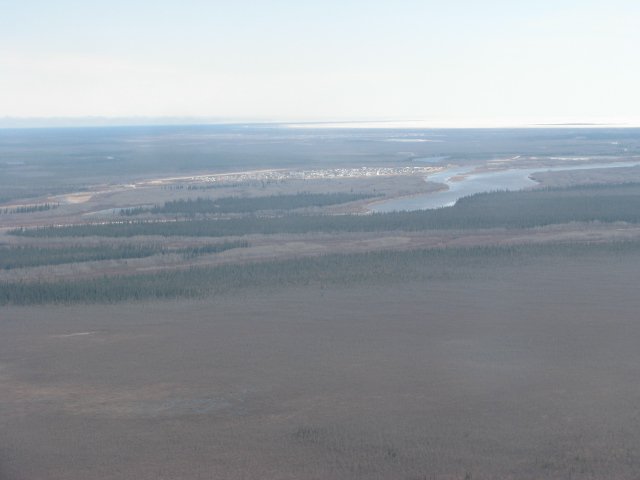
Other coastal communities — Kashechewan, Fort Albany, and Peawanuck — are similarly accessed by air for most of the year. Fort Severn, Canada's northernmost community (at approximately 56°N), is exclusively fly-in year-round. It has no winter road connection and no scheduled ground transport of any kind.
Winter roads
Ontario's winter road network, maintained by the Ministry of Transportation and First Nations communities through the Nishnawbe Aski Nation, typically opens between January and February and closes in March or April. The network provides temporary truck-accessible routes on frozen lakes, muskeg, and rivers, allowing bulk supply deliveries — fuel, building materials, and non-perishables — that are cost-prohibitive by air.
Winter road opening dates are not fixed. They depend on air temperature accumulation, ice thickness monitoring, and ground conditions. The province publishes updates during the winter road season, but specific opening dates for individual routes are typically confirmed only a few weeks in advance. The Nishnawbe Aski Nation also provides information relevant to communities within its territory.
What to arrange before travel
Travel to fly-in communities in northern Ontario requires advance planning in several areas that are not factors in most southern travel:
- Accommodation — Hotels or motels do not exist in most fly-in communities. Some communities have guest accommodation operated by the band office or a local organization. Contact the relevant First Nation band office before travel to determine availability and any conditions of entry.
- Food and supplies — Community stores stock basic supplies, but selection is limited and prices are high. If extended stay is planned, bringing sufficient food and fuel for personal use is advisable.
- Communication — Cell coverage is inconsistent in northern Ontario fly-in communities. Some have reliable connectivity; others rely on satellite internet. A satellite communicator (such as a Garmin inReach) is advisable for safety communication in areas with no cell signal.
- Medical services — Nursing stations serve most fly-in communities, but complex medical cases are typically evacuated by air. Travel health insurance that covers medical evacuation is recommended.
- Vehicle logistics — Personal vehicles cannot travel to fly-in communities. If a vehicle is needed on arrival, it must either be transported via winter road (during the season) or sourced locally.
Costs
Return charter flights to fly-in communities vary substantially depending on origin, distance, aircraft size, and operator. Round-trip fares from Sioux Lookout to northwestern Ontario communities typically range from several hundred to over a thousand dollars per person. Travellers should obtain current fare information directly from air operators, as pricing changes seasonally and fluctuates with fuel costs.